Source Epe Foam Climbing Mat for Home, Hotel, and Exercise
Find 30 epe foam climbing mat options for home, hotel, and exercise use. Buyers can compare specifications like thickness, material, and customization features to select the right product for their needs.
Key considerations
Products List




Comprehensive Sourcing Guide
Strategic Sourcing Guide for EPE Foam Climbing Mats
Procuring EPE foam climbing mats requires a disciplined approach that balances technical performance, safety compliance, and supply chain reliability. These mats are critical components in environments ranging from commercial gyms and hotels to home play areas and outdoor fitness zones. The following guide synthesizes observed market data and technical attributes to provide a framework for evaluating potential suppliers and products. Buyers must navigate a landscape where product definitions can vary significantly between "baby play mats" and "climbing mats," necessitating a rigorous verification of specifications before finalizing orders.
Technical Specifications and Material Composition
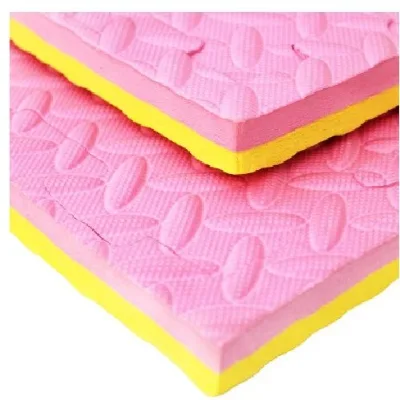
The foundation of any EPE foam climbing mat lies in its material composition and physical dimensions. In the current market, the primary material observed is Expanded Polyethylene (EPE) or XPE (Cross-linked Polyethylene). While some listings distinguish between EPE and XPE, the functional difference often relates to the density and the cross-linking process, which affects durability and recovery. Buyers should verify the specific plastic type listed by the supplier, as some products may be labeled with "PE" generally, while others specify "No Plastic" in certain contexts, which may indicate a composite or non-standard formulation.
Thickness is a critical specification for climbing mats, as it determines shock absorption and stability. Market observations indicate a standard thickness of 10mm for certain carpet-style mats, which serves as a baseline for general cushioning. However, for climbing applications, thickness requirements may vary based on the intended fall height. The product form is consistently identified as "Carpet" or "Mat," with specific models like "SSD-XPE mat 03" and "EPE003" appearing in the supply chain.
Dimensions are equally vital. Standardized sizes observed include 2001801CM, 150cm180cm, 120cm180cm, and 180cm200cm. Some products offer custom dimensions, such as 6926.5*57cm, which suggests a modular or specialized design. The shape is predominantly square, though the "Creeping Body-Building" style implies interlocking or irregular shapes for specific developmental play. When sourcing, buyers must confirm that the listed standard dimensions align with the intended installation footprint.
| Specification Category | Observed Market Data | Verification Requirement |
|---|---|---|
| Material | Foam, XPE, PE | Confirm cross-linking type and density |
| Thickness | 10mm (Standard) | Verify specific thickness for impact rating |
| Dimensions | 2001801CM, 150*180cm | Confirm custom vs. standard sizing |
| Shape | Square, Interlocking | Check for modular compatibility |
| Product Form | Carpet, Play Mat | Ensure fit for climbing vs. play use |
Compliance and Certification Verification
Safety compliance is non-negotiable when sourcing foam mats, particularly for applications involving children or high-impact activities. The observed market data highlights several certifications, including CE, EnCE, and Rohs. The presence of "EnCE" and "Rohs" suggests compliance with European environmental and safety standards, which is crucial for exports to the EU market. However, buyers must exercise caution regarding the specific interpretation of these marks. While "CE" is a mandatory conformity mark for products sold in the European Economic Area, the listing of "EnCE" may refer to a specific national variation or a supplier-specific designation that requires validation.
The standard EN71 is frequently associated with toy safety in the background context, but it is not explicitly confirmed as a certified standard for all listed products in the provided data. Therefore, buyers should not assume EN71 compliance based on the keyword alone. Instead, procurement teams must request current test reports that explicitly reference the relevant safety standards for the target market. For instance, if the mat is intended for "Home, Decoration, Hotel, Outdoor, Bath, Prayer, Exercise," the safety requirements will differ from those for "Improving Intelligence" or "Exercise Kids Balance Concept."
Furthermore, the "Plastic Type" attribute is listed as "PE" or "No Plastic" in different entries. This inconsistency necessitates a request for a Material Safety Data Sheet (MSDS) to ensure the foam does not contain harmful substances like heavy metals or volatile organic compounds (VOCs) that could violate local regulations. The "Rohs" certification mentioned in the data is a strong indicator of restricted hazardous substance compliance, but it should be verified against the specific product model, such as "SL23161" or "EPE003," as certifications are often model-specific.
Cost Drivers and Pricing Dynamics
The pricing for EPE foam climbing mats exhibits a wide range, observed between $0.10 and $800 USD. This variance is not indicative of a single product tier but rather reflects differences in size, material density, customization level, and order volume. The lower end of the price spectrum likely corresponds to smaller, standard-sized mats with minimal customization, while the upper end may represent large, custom-designed installations or high-density foam variants.
The Minimum Order Quantity (MOQ) is another significant cost driver, ranging from 1 to 1000 units. Suppliers with an MOQ of 1 allow for sampling and small-scale testing, which is ideal for initial procurement phases. Conversely, an MOQ of 1000 suggests a focus on bulk manufacturing, which typically lowers the unit cost but increases the initial capital outlay. Buyers must align their order volume with their budget and storage capacity.
Customization is a primary factor influencing cost. The market data confirms that "Customization," "OEM," and "Logo" services are accepted. Adding a custom logo, altering dimensions, or selecting specific colors (such as "Cartoon" or "Multicolor") will invariably increase the unit price. Additionally, the "Handle Bag+Carton" or "Woven Bag or Carton" packaging options may carry different costs depending on the durability required for shipping. The "Delivery" term of "20-25 Days After 30% Deposit" and "Shipping Time" of "17-35 Days" also impact the total landed cost, as longer lead times may require expedited shipping fees to meet project deadlines.
Typical Applications and Usage Scenarios
EPE foam climbing mats serve a diverse array of applications, as evidenced by the broad usage categories listed. The primary use cases include "Home," "Decoration," "Hotel," "Outdoor," "Bath," "Prayer," and "Exercise." For residential buyers, the "Baby Play Mat" and "Type: Baby Play Mat" attributes highlight the product's suitability for child development, specifically for "Improving Intelligence," "Exercise Kids Balance Concept," and enhancing "Sights, Auditory, Tactile, and Olfactory Experience."
In commercial settings, the "Hotel" and "Decoration" uses suggest that these mats are employed in lobbies, playrooms, or wellness centers. The "Outdoor" designation indicates that the material must withstand environmental factors, although the "Cleaning Method: Hand Wash" suggests that deep cleaning or high-pressure washing might not be recommended. For fitness applications, the "Anti-Slip" feature is critical for safety during "Strengthen The Physical Exercise" routines.
The "Gender: Unisex" and "Age: 1-3 Years" or "Age Range: All Ages" attributes indicate that these products are designed for broad demographic appeal. However, the specific "Style: Creeping Body-Building" implies a focus on developmental stages, which may limit their suitability for high-impact adult climbing without additional structural reinforcement. Buyers must match the product's intended usage with their specific operational needs to avoid performance gaps.
Supplier Evaluation and Operational Logistics
Evaluating suppliers requires a focus on their operational capabilities and transparency. The "prod_origin: China" is a consistent attribute, indicating that the majority of supply originates from this region. Buyers should verify the specific factory location and capacity, as "China" is a broad designation. The "Sampling Time: 7 Days" is a key performance indicator for supplier responsiveness, allowing buyers to assess product quality before committing to a bulk order.
Payment terms are standardized in the observed data as "30% Tt in Advance, 70% Balance After Goods Finish." This structure is common in international trade but requires a clear understanding of the "After Goods Finish" milestone. Buyers should ensure that the definition of "finished goods" includes successful quality inspection to mitigate the risk of paying for substandard products. The "Delivery" lead time of "20-25 Days" combined with "Shipping Time" of "17-35 Days" results in a total lead time of approximately 37 to 60 days. This timeline must be factored into project schedules, particularly for time-sensitive installations.
Packaging is another area for evaluation. Options include "Handle Bag+Carton," "Carton," and "Woven Bag or Carton." The choice of packaging affects the protection of the mats during transit and the ease of handling upon arrival. For "Customized" packaging, buyers should confirm the structural integrity of the carton to prevent compression damage, especially for foam products that can be sensitive to stacking pressure.
Quality Control and Long-Term Procurement
Quality control for EPE foam mats should focus on the "Feature: Anti-Slip" and "Features: Durable, Easy to Clean, Light Weight and Portable" attributes. The "Anti-Slip" characteristic is essential for safety, particularly in "Outdoor" or "Bath" environments where moisture may be present. Buyers should request sample testing for slip resistance under wet conditions. The "Durable" claim requires verification through abrasion testing, while "Easy to Clean" should be validated against the "Hand Wash" instruction to ensure the material does not degrade with repeated cleaning.
Long-term procurement considerations involve the "Customization" and "OEM" capabilities. Suppliers that accept "Customized Logo" and "Customized" packaging offer greater flexibility for branding and product differentiation. However, buyers must ensure that the customization process does not compromise the material's integrity. The "Standard: 2001801CM" or similar dimensions should be treated as a baseline, with the understanding that deviations may affect the interlocking or fit of the mats.
Finally, the "Product Form: Carpet" and "Technics: Printed" attributes suggest that the surface design is printed onto the foam. Buyers should inquire about the ink quality and fade resistance, especially for "Outdoor" applications where UV exposure is a factor. The "Color: Cartoon" and "Multicolor" options indicate a wide range of aesthetic choices, but consistency in color matching across batches is crucial for large installations. By rigorously applying these quality control measures, buyers can ensure that the EPE foam climbing mats meet their performance and safety expectations over the long term.
FAQs
What certifications are available for epe foam climbing mats?
Available certifications include CE, EnCE, and Rohs for specific models like SL23161 and EPE003. Buyers should verify that these marks apply to the exact product model before ordering to ensure compliance with safety standards.
How long is the delivery time after placing an order?
Delivery takes 20-25 days after receiving a 30% deposit, followed by a shipping time of 17-35 days. The total lead time depends on the specific supplier and the chosen shipping method for the final destination.
Can I request a custom logo on the epe foam climbing mat?
Yes, suppliers accept customized logos and OEM services for various product models. This customization allows for branding on the mat surface, though it may affect the unit price and production timeline.
What are the standard dimensions for the epe foam climbing mat?
Standard dimensions include 200*180*1CM, 150cm*180cm, and 180cm*200cm depending on the specific model. Some suppliers also offer custom sizes, so confirming the exact footprint is essential for installation planning.
What is the minimum order quantity for epe foam climbing mats?
The minimum order quantity ranges from 1 to 1000 units based on the supplier and product type. Lower MOQs allow for sampling, while higher volumes typically secure better pricing for bulk procurement needs.
Which materials are used to make the epe foam climbing mat?
Materials primarily consist of Foam, XPE, or PE, with some listings specifying EPE or XPE standards. Buyers must confirm the specific plastic type to ensure the material meets durability and safety requirements.